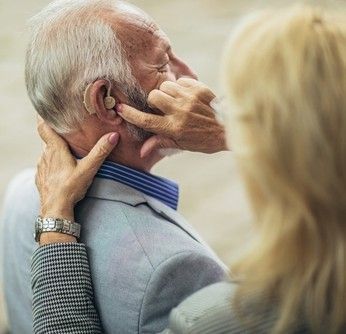
Hearing loss does not always arrive with an obvious moment when the world suddenly seems quieter. At Padgett Hearing Aid Center, we often meet people who have adapted to small changes for months or years before recognizing the early signs of hearing loss showing up in their own conversations.
You may notice that people seem to mumble more than they used to, that restaurant conversations are harder to follow, or that the television volume has gradually crept upward. These changes can be easy to blame on background noise, other people's voices, or simple distraction. Because hearing loss can progress gradually, recognizing those patterns is an important first step.
Key Takeaways
- Gradual hearing loss can develop so slowly that you may not recognize the change at first, especially when your brain and daily habits adapt along the way.
- Age-related hearing loss commonly affects both ears and often reduces the ability to hear higher-frequency sounds, which can make speech seem unclear even when voices still sound loud enough.
- Difficulty following conversations in restaurants, family gatherings, meetings, and other noisy environments can be an early sign that hearing has changed.
- Turning up the television, asking people to repeat themselves, or feeling unusually tired after conversations are additional clues worth paying attention to.
- A professional evaluation can identify whether hearing loss is present, how significant it is, and what type of support may be appropriate. Our hearing loss information and treatment options can help you understand where to begin.
How Gradual Hearing Loss Develops Over Time
Age-Related Hearing Loss (Presbycusis)
Age-related hearing loss is commonly called presbycusis. It develops gradually as people get older and usually affects both ears. Changes within the inner ear are common contributors, although aging can also affect the middle ear and the nerve pathways that carry sound information to the brain.
Long-Term Noise Exposure
Long-term exposure to loud noise can contribute as well. Years spent around machinery, power tools, firearms, loud music, agricultural equipment, or other intense sounds may damage the sensory structures involved in hearing.
The National Institute on Deafness and Other Communication Disorders reports that approximately one in three people in the United States between ages 65 and 74 has hearing loss, while nearly half of adults older than 75 have difficulty hearing. The agency also notes that age-related hearing loss can be so gradual that people may not realize how much hearing ability they have lost. You can read more in the NIDCD's guide to age-related hearing loss.
One reason these changes are difficult to recognize is that hearing is not simply about volume. Many people continue hearing that someone is speaking while gradually losing some of the clarity needed to understand individual words.
Why High-Frequency Hearing Changes Can Be Easy to Miss
Age-related sensorineural hearing loss commonly affects higher frequencies earlier or more noticeably than lower frequencies. High-frequency information includes many consonant sounds that help distinguish one word from another.
Vowel sounds generally contain more acoustic energy and can make speech sound loud enough, while softer consonants provide much of its detail. If those details become harder to hear, a sentence may sound loud but unclear.
That is why someone experiencing hearing loss may say, "I can hear you, but I cannot understand you." The problem may not be that the speaker needs to talk louder. The listener may be missing parts of the speech signal that make similar words easy to distinguish.
How the Brain and Your Habits Adapt
Your brain continuously uses context, visual information, previous experience, and expectations to interpret speech. If part of the auditory signal becomes less distinct, those additional clues may help you understand what was said.
This compensation is useful, but it can also make hearing changes less obvious. You might begin sitting closer to the person speaking, watching faces more carefully, choosing quieter seats, or avoiding especially noisy restaurants without consciously thinking of those choices as hearing-related.
Listening can also require more concentration when the sound reaching you is incomplete. Instead of simply hearing a sentence, you may have to interpret fragments, use context to fill gaps, and continually decide what you think was said.
That additional listening effort helps explain why some people with hearing difficulty report feeling tired or frustrated after lengthy conversations. If these situations are becoming familiar, a comprehensive hearing test can provide clearer information about your hearing ability and speech understanding. If you are already wondering whether it is time for an evaluation, that additional listening fatigue is often a helpful clue.
Early Signs of Hearing Loss You Shouldn't Ignore
Gradual hearing changes often show up through behavior before a person describes sounds as noticeably quieter. We encourage people to look for patterns rather than waiting for one unmistakable symptom.
Common signs include:
- Frequently asking people to repeat themselves.
- Feeling as though family members or coworkers are mumbling.
- Turning the television or radio louder than other people prefer.
- Having more difficulty understanding speech over the phone.
- Struggling to follow conversations in restaurants or crowded rooms.
- Watching a speaker's face more closely to understand what is being said.
- Missing parts of group conversations or jokes.
- Feeling mentally tired after long periods of listening.
- Avoiding noisy social settings because conversations have become frustrating.
- Experiencing persistent ringing, buzzing, or other sounds associated with tinnitus.
None of these signs proves that hearing loss is present. Earwax, middle-ear conditions, medication effects, illness, and other factors can also affect hearing. A professional evaluation helps distinguish among possible causes instead of relying on assumptions.
Why Background Noise Often Reveals the Problem First
A quiet one-on-one conversation provides a great deal of useful information. There may be few competing sounds, you can see the speaker's face clearly, and the subject of the conversation supplies context.
A crowded restaurant creates a much more demanding listening environment. Multiple voices compete for attention, music and dishes add background noise, and the sounds you need to understand may overlap with other frequencies.
Someone with mild hearing loss may communicate fairly comfortably in a quiet room yet struggle considerably in a busy environment. That difference is one reason difficulty understanding speech in noise deserves attention even if conversations at home still seem manageable.
Our broader hearing care services include evaluation, treatment guidance, hearing aid support, maintenance, and other resources designed around real-world listening needs.
Sensorineural, Conductive, and Mixed Hearing Loss
Not every gradual hearing change has the same cause. Hearing loss is commonly categorized as sensorineural, conductive, or mixed.
Sensorineural Hearing Loss
Sensorineural hearing loss involves the inner ear or auditory nerve pathways. Age-related hearing loss and many forms of noise-induced hearing loss fall into this category. Damage to sensory hair cells in the human inner ear is generally permanent, so treatment often focuses on improving functional hearing rather than restoring those cells.
Conductive Hearing Loss
Conductive hearing loss occurs when something interferes with sound traveling efficiently through the outer or middle ear. Possible causes include impacted earwax, fluid in the middle ear, infection, problems involving the eardrum, or certain abnormalities of the middle-ear structures.
Some conductive causes are medically treatable, which is another reason a hearing evaluation matters. Hearing aids are not automatically the correct answer for every person who notices a hearing change.
Mixed Hearing Loss
Mixed hearing loss includes both conductive and sensorineural components. Treatment depends on the causes identified during an evaluation.
When Hearing Changes Require Faster Medical Attention
This article focuses primarily on changes that occur gradually. Sudden hearing loss is different and should not simply be watched to see whether it improves.
If your hearing suddenly drops in one or both ears, particularly over hours or a few days, seek prompt medical evaluation. Sudden sensorineural hearing loss can be a medical emergency, and treatment may be more effective when it begins quickly.
Prompt medical attention is also appropriate when hearing changes occur with symptoms such as significant dizziness, new neurological symptoms, drainage, severe ear pain, or other unusual symptoms.
Persistent tinnitus in only one ear, pronounced differences between ears, or other unexplained one-sided symptoms should also be discussed with an appropriate healthcare professional. These patterns may require medical assessment beyond routine hearing aid care.
Hearing Loss, Social Connection, and Cognitive Health
Research has found associations between hearing loss, social isolation, and cognitive decline. However, it is important not to overstate what those associations mean.
Hearing loss does not mean that someone will develop dementia, and hearing aids should not be described as a guaranteed way to prevent cognitive decline. Hearing treatment can improve access to sound and communication, and better communication may make it easier to remain socially engaged.
For many people, that practical benefit is reason enough to address hearing difficulty. Conversations with spouses, children, grandchildren, friends, coworkers, and healthcare providers are easier to participate in when speech is more accessible.
At Padgett Hearing Aid Center, our focus is on helping you understand your hearing and identify options that support the situations that matter most in your life.
Everyday Strategies That Can Make Conversations Easier
You do not need to wait for an appointment to make your listening environment more comfortable. Small changes can reduce unnecessary competition and make speech easier to follow.
Try these strategies:
- Face the person you are speaking with so you can use natural facial and visual cues.
- Ask family members to get your attention before speaking instead of calling from another room.
- Turn off unnecessary background sounds such as a television during important conversations.
- Choose a quieter section of a restaurant when possible.
- Sit where you can clearly see the people participating in a group conversation.
- Move closer to the person speaking rather than asking them to shout.
- Protect your ears when you know you will be around hazardous noise.
If occupational noise, hobbies, concerts, power tools, hunting, or other loud activities are part of your routine, our custom hearing protection options can help reduce unnecessary noise exposure.
What a Professional Hearing Evaluation Can Tell You
A hearing test does more than determine whether sounds seem loud or soft. Depending on the evaluation performed, testing can measure hearing sensitivity across different frequencies and assess how well you understand speech.
Those results help establish whether hearing loss is present and how it may be affecting everyday communication. They can also provide a baseline for monitoring changes over time. During your visit, a hearing instrument specialist can walk you through exactly what your results mean.
Not everyone who schedules an evaluation needs hearing aids. Depending on the findings, the appropriate next step may include monitoring, hearing protection, medical referral, hearing technology, or another recommendation.
At Padgett, we want the evaluation to give you useful information, not pressure you into a predetermined solution.
Modern Hearing Aid Solutions
When hearing aids are appropriate, today's technology provides significantly more flexibility than devices from previous generations. Digital hearing aids process sound according to an individual's hearing needs rather than simply amplifying every sound equally.
Depending on the device and fitting, modern hearing aids may offer features such as:
- Rechargeable power systems.
- Directional microphones.
- Digital noise-management features.
- Automatic listening programs.
- Smartphone connectivity.
- Direct audio streaming on compatible devices.
- App-based adjustments.
- Tinnitus-management features on certain models.
No technology can recreate normal biological hearing or regenerate damaged inner-ear hair cells. The purpose of a hearing aid is to improve access to sound and speech so communication becomes easier and more functional.
The right technology also depends on much more than the amount of hearing loss. Lifestyle, dexterity, ear anatomy, communication goals, budget, comfort, and the environments you spend time in should all be considered. Our modern hearing aid options provide more information about available technology.
Frequently Asked Questions
Can you have hearing loss without realizing it?
Yes. Age-related hearing loss usually develops gradually, so people may adapt to small changes without immediately recognizing them. Family members sometimes notice increased television volume or repeated questions before the individual notices a significant difference.
Why can I hear people talking but not understand them clearly?
Some forms of hearing loss affect frequencies that contribute heavily to speech clarity. You may still hear the overall loudness of someone's voice while missing softer speech details that distinguish one word from another.
Is difficulty hearing in restaurants an early sign of hearing loss?
It can be. Background noise creates a more challenging listening environment, so mild hearing difficulties may become noticeable in restaurants, parties, meetings, or family gatherings before they cause significant problems during quiet conversations.
Does tinnitus always mean that I have hearing loss?
No. Tinnitus can occur with hearing loss, but it has multiple potential causes and can also occur in people whose standard hearing tests do not show substantial loss. Persistent, bothersome, or one-sided tinnitus deserves professional evaluation.
Can gradual hearing loss be reversed?
It depends on the cause. Permanent sensorineural hearing loss generally cannot be reversed, but hearing aids and other strategies can improve functional hearing. Some conductive problems, such as certain cases involving earwax or middle-ear conditions, may improve when the underlying cause is treated.
Do hearing aids prevent dementia?
Hearing aids should not be presented as a guaranteed dementia-prevention treatment. Research supports treating hearing difficulty to improve communication and access to sound, and some studies are investigating how hearing treatment may relate to cognitive outcomes.
Take the Next Step With Padgett Hearing Aid Center
Padgett Hearing Aid Center has served patients since 1979, with offices in Brenham, Bastrop, Katy, and Texarkana. Our goal is to make hearing care understandable, comfortable, and personalized rather than rushed.
If you have noticed that conversations seem less clear, the television keeps getting louder, or noisy environments require more effort than they once did, you do not have to guess about what is happening. We can evaluate your hearing, explain the results, and help you understand appropriate next steps.
Reach out to Padgett Hearing Aid Center to find current office addresses, phone numbers, hours, and appointment information. We are here to help you stay connected to the conversations and sounds that matter most.